

There seems to be a disconcerting shift in assumptions about interest rates and markets. More specifically, a broadening complacency about the implications of a Fed pivot –defined as a halting of rate hikes or the start of easing in Fed policy.
The growing expectation that once Fed tightening is halted, it would mark the start of the mother of all rallies in equity indices, metals, and cryptos. The thinking goes that once bond yields—shift from a peaking formation to a clear decline—financial conditions would ease, the dollar cheapens, and liquidity conditions improve. Does this make sense? Or is it dangerously wrong?
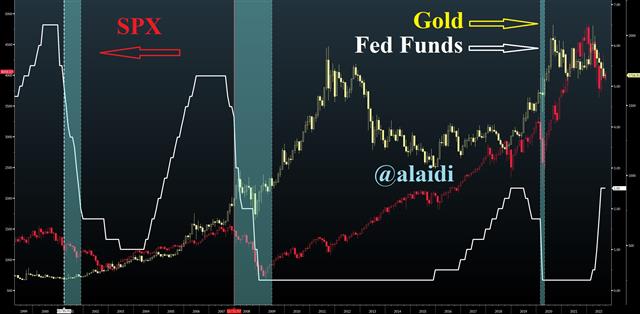
It should be wrong. Whether dangerously so depends on your portfolio allocation and/or positioning. Remember that each Fed easing campaign since 2000 coincided with a recession and a decline of at least 30% in equity markets. Before you rush to protest that “all Fed easings occurred during recessions,” recall the rate cuts of autumn 1998 aimed at alleviating the economic pain of the Asian crisis and the blow-up of LTCM, which occurred during a US economic expansion.
Three Crises, Three Market Playbooks
You all know by now that the three easing campaigns of 2001-2002, 2007-2009, and 2019-2020 were triggered by distinct types of economic/financial crises. What you may not know is the following:
2001-2002 Fed easing ensued entirely during a declining market. In fact, equity indices peaked nearly 12 months before the start of the Fed easing. What on earth was Greenspan waiting for?
2007-2009 Fed easing began one month before the market’s peak (or two months if you start from the discount rate cut of August 2007). This basically means, that financial markets briefly eked out one final high before the crash.
2019-2020 Fed easing was an affair unlike any other. Interest rate cuts began in July 2019, firing up an accelerating bull market, which raged throughout the rate cuts in H2 2019. Had it not been for the global outbreak of COVID-19 in February 2020, would markets have resumed rallying during global rate cuts?
Assuming the current bond market prediction for Fed rate cuts in Q1 2023 is realized, how would markets react? Will it be the prolonged selloffs a la 2001-2002 or the late-stage plunge of 2020? This obviously depends on the length and breadth of the ensuing recession as well as the break in equity and bond markets.
Undoubtedly, Fed policy cycles are far shorter than in 2001-2. This may lead many to anticipate a prolonged rally at the first sign of Fed pivot, as was the case in summer 2019. Yet, there are serious obstacles to such thinking. We shall find out next week in the 2nd part of this piece.

