
A large number of retail investors in the U.S. have taken out loans, often at exorbitant interest rates, to buy cryptocurrencies, and more than half of such investors ended up losing money, according to a recent survey by DebtHammer.
DebtHammer surveyed more than 1,500 people in the U.S. to find out about their crypto investing habits and how they affect the already indebted nation.
Loans for crypto investments
Over 21% of crypto investors said they’ve used a loan to pay for their crypto investments, according to the survey.
Personal loans seem to be the most popular choice among investors, as over 15% of them said they’ve used one to fund their crypto purchases. Many also used payday loans, title loans, mortgage refinances, home equity loans, and even leftover student loan funds to acquire crypto.
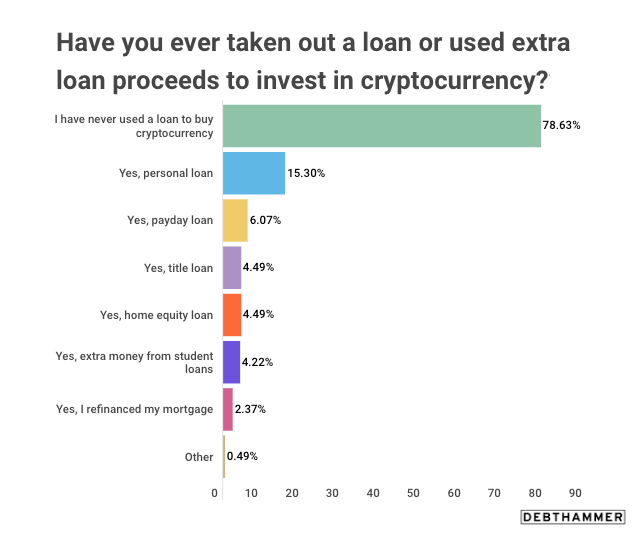
Around 1 in 10 investors who used a payday loan used it to purchase cryptocurrencies. Most borrowed between $500 and $1,000 to invest in crypto, the survey showed. However, researchers at DebtHammer noted that these were risky purchases despite the small amount borrowed, as payday loans average at around 400% APR.
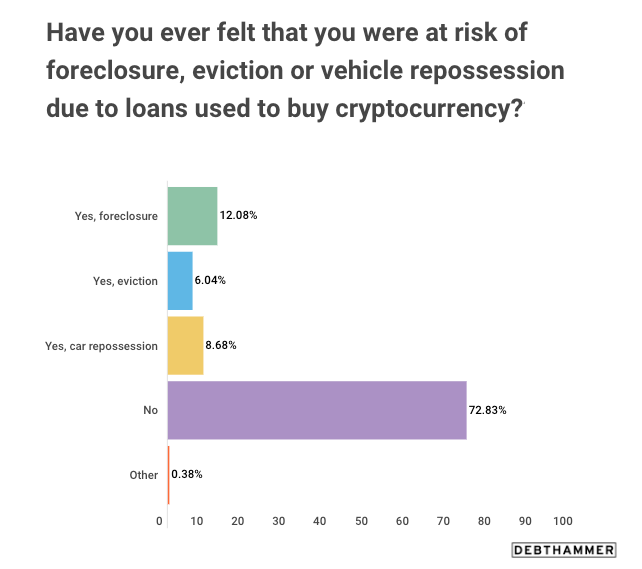
Retail investors who used loans to buy crypto said that their purchases haven’t always been fruitful. Almost 19% of respondents said they’ve struggled to pay at least one bill due to their crypto investments, while around 15% said they’ve worried about eviction, foreclosure, or car repossession. Payday loan users seemed to have suffered slightly less, with only 12% reporting struggling to pay a bill or worrying about evictions, foreclosures, or repossessions.
Loans aren’t the only way investors were buying cryptocurrencies when short on cash.
According to the survey, more than 35% of respondents said they’ve used a credit card to purchase crypto. While around 20% of them paid it off when the bill came due, 14% said they were paying it off incrementally with either an 0% APR introductory offer or at the full interest rate.
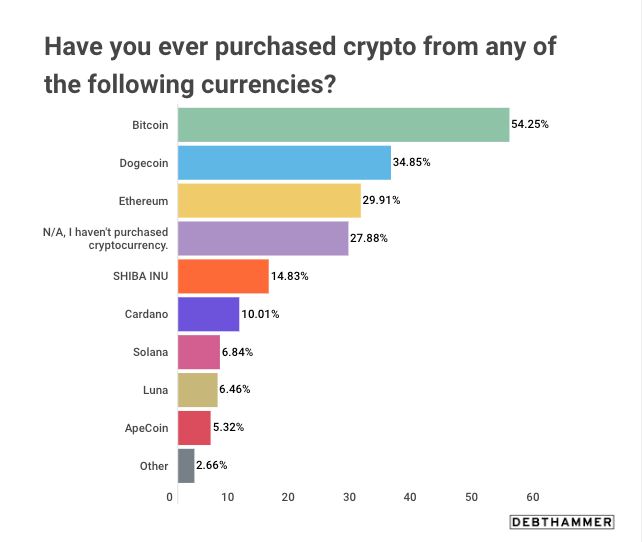
All of the borrowed money went to just a handful of cryptocurrencies. The survey showed that more than half (54%) of respondents used the borrowed money to buy Bitcoin (BTC). Dogecoin (DOGE) came in second, with almost 35% of respondents saying they purchased the token with loans, while just under 30% said they bought Ethereum (ETH).
Just under 23% of those who borrowed money to buy cryptocurrencies said they did it because crypto prices fell sharply. About 15% said they considered cryptocurrencies a good long-term investment, while 17% said crypto prices were “historically low.”
A notable percentage of respondents (18.5%) said that they borrowed money to buy cryptocurrencies because they were offered a 0% promotional interest rate by their credit card company or bank.
However, not all who gamble win.
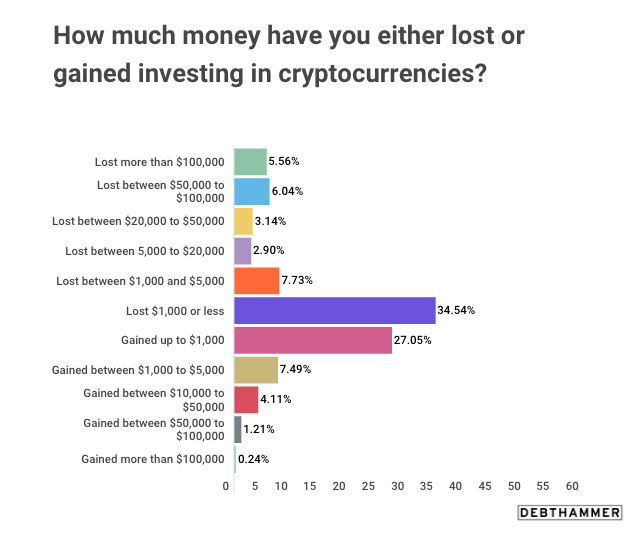
Out of those who borrowed money to invest in cryptocurrencies, around 60% lost money. And while over a third of them lost $1,000 or less, 6% said they lost between $50,000 and $100,000, and 5.5% said they lost more than $100,000.
Investing in cryptocurrencies with borrowed money doesn’t translate to significant gains, either. The majority, or 27%, gained just up to $1,000, while only 7.5% gained between $1,000 and $5,000.