


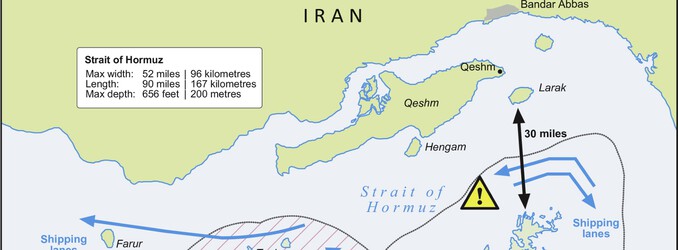
HOUSTON (WO) — Eight months after the Persian Gulf disruption started, oil and gasoline planners can not deal with Center East provide shocks as short-lived, panelists mentioned Thursday on the 2026 SPE Annual Technical Convention and Exhibition (ATCE) in Houston, Texas. As an alternative, corporations and governments should construct resilience in opposition to a long time of danger that historic fashions by no means anticipated.
Moderated by Skip York of Rice College’s Baker Institute for Public Coverage, the session, titled “Power Realism: Economics, Coverage, and the Transition Forward,” featured Michael Cohen of bp, Michelle Foss of L’Acadie Community, Robert McNally of Rapidan Power Group and Robert Schwiers Jr. of Chevron.
“I do not assume many people thought earlier than February 28 that the US would permit an adversary to disrupt the circulate of hydrocarbons from the Persian Gulf for greater than two or three days,” mentioned McNally, founder and president of Rapidan. That, he famous, is roughly how lengthy it took the U.S. navy to revive flows in previous Gulf conflicts.
Schwiers, Chevron’s chief economist, mentioned the disruption is “clearly difficult the idea of reliability and vitality safety” and can shift how the business allocates capital. Even so, he mentioned, “demand’s actually been resilient” exterior the economies hit straight by shortages, and the worldwide system has tailored.
York then turned to an viewers query on ‘black swans,’ the uncommon, hard-to-predict occasions with outsized penalties that he known as “considered one of my favourite issues to consider and argue.” “No person envisioned that the Strait of Hormuz could be closed for eight months,” York mentioned, asking how consuming nations can construct resilience in opposition to such occasions, which carry “excessive penalties once they do happen.”
“I’ve now bought to place into my bingo card a long time of potential danger from that area,” mentioned McNally. He expects extra storage, twinned pipelines, gasoline strains repurposed for oil, export routes from Kuwait and Iraq to the Mediterranean, and extra funding within the Americas. However he warned that vitality coverage is often made in disaster, and inflexible authorities fixes result in “longer and costlier adjustment durations.”
Cohen, bp’s U.S. economist and head of oil and refining, mentioned the business’s instruments are a part of the issue. “A lot of our fashions and planning are primarily based on historical past,” he mentioned.
Resilience will come at a value, Cohen added. Transferring from a just-in-time vitality system to at least one that values redundancy means customers or governments should pay, which is inflationary. He expects key Gulf producers to construct storage additional afield over the following two to 3 years. Cohen famous that the disaster additionally confirmed that China can flex its personal demand or import stage “to the tune of three-to-five million barrels a day.”
Foss, an advisor at L’Acadie Community, known as long-tail occasions “insurance coverage issues” and requested whether or not some black swans are self-inflicted. “In case you pursue insurance policies that discourage refining capability in Europe, and that additionally discourage Europe from persevering with to supply oil, and you’ve got a significant Center East occasion and a diesel scarcity, you are going to have an issue,” she mentioned. True resilience, she argued, means maintaining refining and upstream capability wholesome sufficient to ship in a disaster.
Schwiers pointed to Asia, the place “a component of hoarding” has led a number of governments to ban petroleum product exports. Refiners there lower runs as a result of they might not optimize their programs, leaving these nations shorter on product. The identical factor would occur within the U.S., he mentioned, if it banned diesel exports.
McNally remained hopeful that open markets will discover their method via. “So long as we hold our programs dynamic and free, I am cautiously optimistic that we’ll stumble and bumble our method via the noise,” he mentioned.