


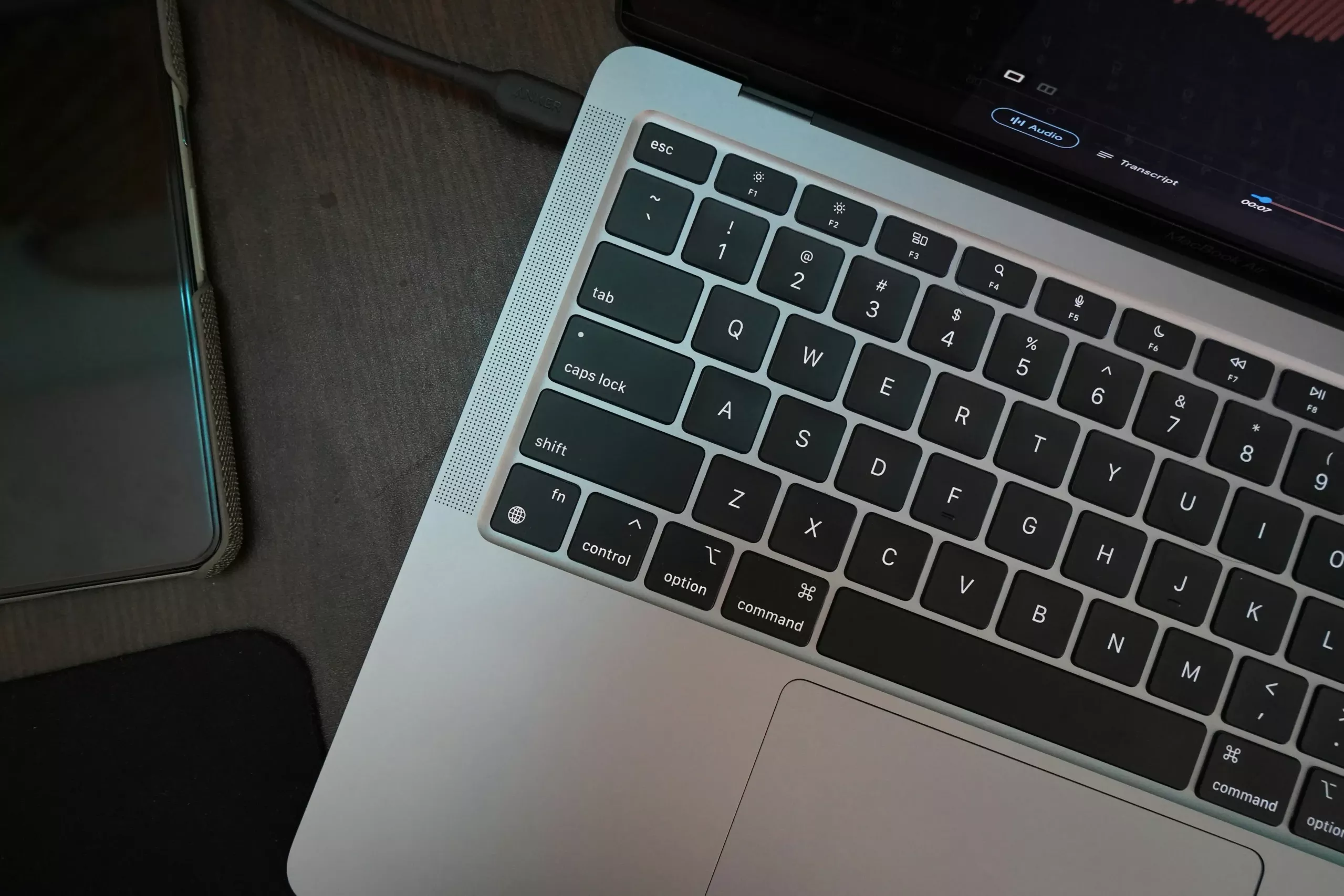
In a nutshell: Hitting mute on a MacBook is meant to close it up. A brand new open-source software can nonetheless get one speaking, although, and the voice comes straight out of the trackpad. It really works by buzzing the small haptic motor that usually fakes every click on, simply quick sufficient to show these faucets into robotic speech.
Cody Collier, the developer behind the mission, posted a demo on X over the weekend. Within the clip, his MacBook reads traces aloud in a buzzy, robotic voice between bursts of chiptune-style beeps. It is a acquainted form of stunt for anybody who has watched floppy drives play complete songs, besides this one matches underneath your palm.
Getting there meant working round Apple, although. The corporate’s public haptics API solely lets apps set off three mounted faucets. That is nowhere close to sufficient management for audio, so Collier’s software, referred to as No Speaker, reaches into a personal, undocumented macOS framework referred to as MultitouchSupport as an alternative. From there, it may drive the motor as much as 4,000 occasions a second.
– cody (@codycollier) November 22, 2026
Collier additionally measured each semitone the trackpad might hit, from 98 Hz as much as almost 4 kHz. Surprisingly, the glass will get pretty loud throughout most of that vary, particularly round 1 kHz, the place the cleanest notes sit.
Making it speak took a bit extra work. The software first has the built-in macOS voice learn the textual content into reminiscence. Each 10 milliseconds, it then picks out the 2 strongest formants – the resonances that give vowels their form – plus the pitch and loudness. The motor performs these again as a pair of tones. Hissy seems like “s” and “f” flip into fast, high-pitched bursts as an alternative.
Anybody curious can seize No Speaker free on GitHub. It wants a Power Contact trackpad, so in principle any MacBook from 2015 onward ought to work, together with the Magic Trackpad 2 or newer. Up to now, although, Collier has solely examined it on an M5 Max MacBook Professional. He additionally recommends setting the laptop computer on a desk, because it will get a lot quieter in your lap.
The software by no means pushes the motor previous its regular most energy, Collier says. And since MultitouchSupport is undocumented, any macOS replace might break the entire thing.
Oddly sufficient, Microsoft has already filed for a trackpad patent constructed to do that on goal. As Home windows Newest noticed final yr, the corporate filed a design in 2023 that treats the glass pad itself like a speaker cone. It could use vibrations beneath 400 Hz for clicks and play audio from there as much as 10 kHz. That is greater than twice as excessive as No Speaker can attain on a MacBook.